For artists5 min read
What Is an Open Mic? A Beginner's Guide to Your First Open Mic Night

Partha Sarathi CeeraFounder, Gig'le

Many of the performers you admire started in a room like this: a café corner, a borrowed microphone, a list of names on a sheet of paper and an audience of other people waiting for their own turn.
That is an open mic. It is one of the easiest ways to try performing in front of real people, and it is one of the best ways to meet other artists in your city. This guide explains what an open mic is, how to find one near you, how signing up works and how to prepare for your first slot.
What is an open mic?
An open mic (short for "open microphone") is a live event where the stage is open to anyone who signs up. Instead of a fixed line-up of invited acts, the performers are whoever puts their name down that day.
Each person gets a short slot, usually a few minutes. A host introduces the performers, keeps time and keeps the evening moving. The audience is often a mix of other performers, their friends and regulars at the venue.
Open mics run in cafés, bars, bookshops, studios, cultural spaces and college campuses. Some are free to perform at and free to watch. Others charge a small entry fee or ask you to buy something from the venue.
Because nobody is expected to be polished, an open mic is where people try things: a new song, five minutes of untested jokes, a poem they have never read aloud.
The main types of open mic
Not every open mic is the same, and it helps to pick the right room.
Music open mics
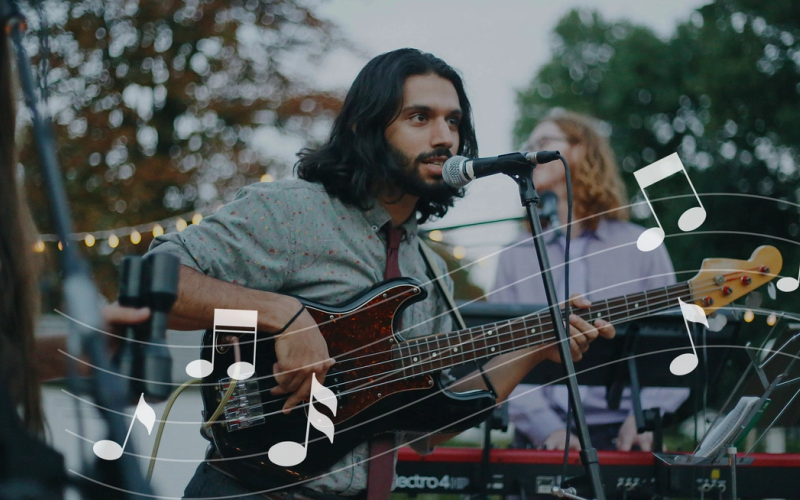
For singers, singer-songwriters, instrumentalists and small acts. You usually get one to three songs. Many venues provide a microphone and a basic sound system, but you bring your own instrument. Covers are normally welcome; some nights are for originals only.
On Gig'le, music gigs and events are listed on the music page.
Comedy open mics
For stand-up. Slots are short, often three to five minutes, and strictly timed: when the host shows you a light or a signal, you finish your joke and get off. Comedy open mics are where comedians test new material, so the room expects some jokes not to land. See comedy gigs and events on Gig'le.
Poetry and spoken word open mics
For poems, spoken word, short stories and sometimes storytelling. You read or perform one or two pieces, in any language the room welcomes. These tend to be the quietest and most attentive audiences. Poetry and storytelling sit under literature on Gig'le.
Mixed open mics
Many nights welcome everything: a poem, then a song, then a comedy set. These are a good first room, because the audience is not comparing you with ten other people doing the same thing.
How to find an open mic near you
There is no single list, so use a few routes:
- Search event listings for your city. On Gig'le, the Events board can be filtered by craft and city, and organisers and venues list open mics, jam nights and workshops there. If you are in Hyderabad, start with what's on in Hyderabad.
- Follow venues that host them. Cafés and cultural spaces usually announce their open mics on their own social pages a week or two ahead.
- Follow the organisers. Many open mics are run by a small group or community that moves between venues. Once you find one, follow them rather than the venue.
- Ask other artists. Go to one open mic and ask the people performing where else they go. This is often the fastest way to learn which nights are worth your time.
Check the details before you travel. Open mics change day, time and venue often, and many ask performers to register in advance.
How signing up works
Each open mic has its own system, and the event listing normally explains it. The common ones are:
- Register in advance. You fill in a form or message the organiser, and they confirm your slot. This is common for comedy and for popular nights.
- Sign up at the door. A list goes out before the show, and slots are first come, first served. Arrive early.
- A draw. Names go into a bowl and the order is picked at random.
Find out three things when you sign up: how long your slot is, what equipment the venue provides, and whether there is a fee or a minimum order.
How to prepare for your first open mic
Pick less material than you think you need
Nerves make people rush, and they also make people ramble. If your slot is five minutes, prepare four. For music, that is usually one song you know completely, plus one in reserve. For comedy, it is your three or four strongest ideas, not everything you have written.
Time it out loud
Reading in your head is faster than performing. Run your set aloud, standing up, with a timer. Then run it again. Going over time is the one thing that reliably annoys hosts and the performers after you.
Start with your safest piece
Open with the song you could play half asleep or the joke that has made the most friends laugh. Once the first minute goes well, the rest gets easier.
Know the equipment
Musicians: ask whether there is a line-in for your instrument and whether you can do a quick sound check. Bring your own cable, a tuner and a spare pick or strings. Poets: print your piece or have it on a phone with the brightness up and notifications off. Comedians: decide what you will do with the microphone stand before you walk up.
Rehearse the first ten seconds
Decide exactly how you will begin: your name, one line, then your first piece. The hardest moment is the walk to the microphone, and having the opening fixed gets you past it.
Open mic etiquette
A few habits make you welcome in any room:
- Stay for the others. Don't perform and leave. The people who clapped for you deserve an audience too.
- Keep to your time. Finish when the host signals, even mid-set.
- Listen quietly. No talking through someone's poem, and keep your phone away unless you are filming a friend who asked you to.
- Support the venue. If the open mic is free, buy a coffee. That is what keeps it running.
- Be kind about other people's work. Everyone in the room is trying something.
- Thank the host. They remember who was easy to work with.
What to do after your set
The performance is only part of the point. What you do next is what turns one open mic into something more.
- Talk to the other performers. Ask what they are working on and where else they perform. Many collaborations start in this conversation.
- Ask for one piece of honest feedback from someone whose set you liked.
- Write down what worked while you remember it: which line got a reaction, where you lost the room, what you would cut.
- Record your set if the venue allows it. A short clip of a live performance is useful when you apply for paid gigs later, because an organiser can see what you actually do on stage.
- Come back. The second and third visits are when people start to recognise you.
From open mics to paid gigs
Open mics are usually unpaid. Their value is practice, feedback and the people you meet, and for many artists they are a step towards paid work.
Organisers and venues sometimes go to open mics, or run them, to find artists for their own events. Showing up regularly, performing well and being easy to work with gets you noticed.
When you feel ready, look for paid opportunities alongside the open mics. On Gig'le, organisers and venues post gigs on the Gigs board, each with the craft, location, experience level and pay stated. You press Apply, the organiser is notified and can accept or decline, and the work you have shared on your profile is what they look at. Here's how it works.
Find an open mic near you on the Events board, or join Gig'le to share your first performance.
Frequently asked questions
What does open mic mean?
- Open mic is short for "open microphone". It is a live event where anyone can sign up to perform a short slot, such as a song, a stand-up set or a poem, in front of an audience. There is no fixed line-up; the performers are whoever puts their name down.
How do I find an open mic near me?
- Search event listings for your city, follow local cafés and venues that host them, and ask other artists. On Gig'le's Events board you can filter upcoming events by craft and city to find open mics and jam nights near you.
Do I need experience to perform at an open mic?
- No. Open mics are meant for trying things out, and many rooms have first-timers. Choose a short piece you know well, time it and tell the host it is your first time if you like.
Do you get paid for performing at an open mic?
- Usually not. Open mics are for practice, feedback and meeting other artists, and some charge a small entry fee or ask you to order something. Paid work comes from gigs, which organisers and venues post separately.
How long is an open mic slot?
- It varies by event. Comedy slots are often three to five minutes, music slots one to three songs, and poetry slots one or two pieces. The organiser will tell you when you sign up.

Partha Sarathi Ceera
Founder, Gig'le
A former performing musician in Hyderabad, he writes about live performance, artist collaboration and opportunities in India's independent arts scene.
Keep reading

Find your people on Gig'le
Share your work, find paid gigs and discover events near you. Creating an account is free.
Create an account